



Leather shoes are valued for their appearance, comfort, durability, and timeless style. However, even high-quality leather needs proper care to maintain its condition over time.
Regular maintenance can help protect leather from dirt, moisture, drying, cracking, and unnecessary wear. For retailers, wholesalers, and footwear buyers, understanding basic leather care can also help customers get greater long-term value from their shoes.
Here are the key practices that can help extend the lifespan of leather footwear.
1. Clean Leather Shoes Regularly
Dirt and dust can gradually build up on the surface of leather. If they are left for long periods, particles can affect the leather’s appearance and contribute to surface wear.
Regularly removing dust with a soft brush or clean cloth is a simple first step.
For more noticeable dirt, leather should be cleaned using a product appropriate for the specific type and finish of leather. Avoid using aggressive household cleaning products unless they are specifically designed for leather.
2. Keep Leather Properly Conditioned
Leather can lose moisture and flexibility over time, particularly when exposed to dry conditions or frequent use.
A suitable leather conditioner can help maintain flexibility and reduce the risk of excessive dryness.
However, conditioning should not be excessive. The product should be appropriate for the leather type, and manufacturers’ care recommendations should be followed.
3. Protect Shoes from Excessive Moisture
Water and leather do not always make a good combination.
Heavy exposure to rain or moisture can affect certain leather finishes and may contribute to staining, deformation, or drying as the leather loses moisture during the drying process.
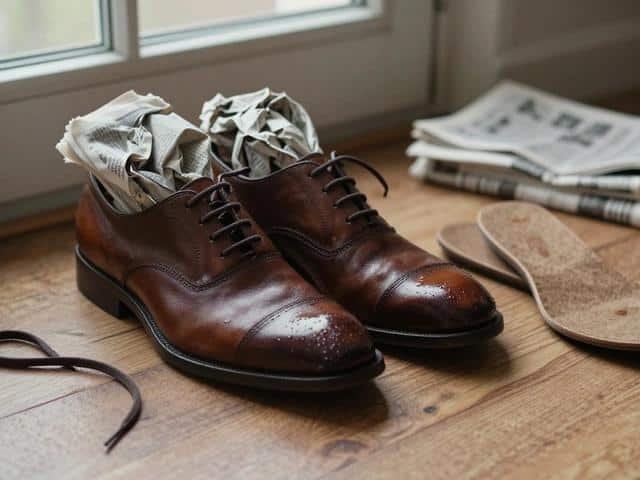
If leather shoes become wet, allow them to dry naturally at room temperature. Avoid placing them directly next to radiators, heaters, or other strong heat sources.
4. Use Shoe Trees to Help Maintain Shape
Leather shoes can gradually develop creases during regular use.
Shoe trees can help maintain the shape of the footwear while it is being stored. They can also help keep the interior of the shoe in better condition between uses.
For formal leather shoes, wooden shoe trees are commonly used as part of a regular maintenance routine.
5. Rotate Your Shoes
Wearing the same pair every day exposes the leather, sole, lining, and other components to continuous stress.
Rotating between several pairs gives footwear more time between uses and can support better drying and recovery.
6. Store Leather Shoes Correctly
Storage conditions can have a significant effect on leather footwear.
Shoes should ideally be stored in a clean, dry environment away from prolonged direct sunlight and excessive heat.
Keeping shoes properly supported and avoiding unnecessary pressure from other items can also help preserve their original shape.
For long-term storage, breathable shoe bags can provide protection from dust while allowing appropriate airflow.
7. Polish When Appropriate
Polishing is not only about creating a shine.
For suitable types of smooth leather, a quality shoe polish can help maintain the appearance of the surface while providing an additional layer of care.
The polish should match the leather’s color and finish. Before applying a new product, testing it on a small, less visible area is a sensible precaution.
8. Take Care of the Soles and Heels
Leather maintenance should not focus only on the upper.
The soles and heels also experience significant wear during walking. Checking them regularly can help identify problems before they become more serious.
Replacing worn heels or repairing soles when necessary can extend the useful life of a quality pair of shoes and help protect the rest of the footwear.
9. Avoid Improper Cleaning Methods
Some common household cleaning methods can cause unnecessary damage to leather.
Harsh detergents, excessive water, strong heat, and unsuitable chemicals may affect the leather’s color, finish, or flexibility.
The safest approach is to identify the leather type and follow care instructions recommended for that specific material.
Different finishes—including smooth leather, suede, nubuck, and coated leather—require different maintenance methods.
10. Quality and Maintenance Work Together
Proper maintenance can significantly influence the useful life of leather footwear, but maintenance starts with the quality of the original product.
Well-constructed footwear with appropriate materials, strong stitching, reliable sole attachment, and careful finishing provides a better foundation for long-term use.
Why This Matters for B2B Footwear Buyers
Retailers, wholesalers, and distributors can benefit from understanding leather maintenance because customers increasingly want products that provide lasting value.
Providing basic care information alongside quality footwear can help customers understand how to:
- Protect their investment
- Maintain the appearance of leather
- Reduce unnecessary replacement
- Preserve comfort and shape
- Get longer use from their footwear
Why Choose Turkish Trade?
Turkish Trade connects international B2B buyers with Turkish footwear for wholesale and worldwide export.
When sourcing leather footwear, buyers can consider material quality, craftsmanship, construction, consistency, design, and export capabilities together.
Proper maintenance can help preserve these qualities after the footwear reaches the customer, allowing well-made leather shoes to remain attractive and functional for longer.
Conclusion
Leather footwear can provide years of use when it is properly maintained.
Regular cleaning, appropriate conditioning, protection from excessive moisture, correct storage, shoe trees, rotation, polishing, and timely sole repairs can all contribute to longer-lasting leather shoes.
For B2B footwear buyers, choosing well-made products and providing customers with clear care guidance can create value beyond the initial purchase.
Looking for Quality Turkish Leather Footwear for Wholesale?
Contact Turkish Trade for B2B footwear sourcing and worldwide export.
Email: info@turkishtrade.co
WhatsApp: +90 552 866 52 27
Website: turkishtrade.co